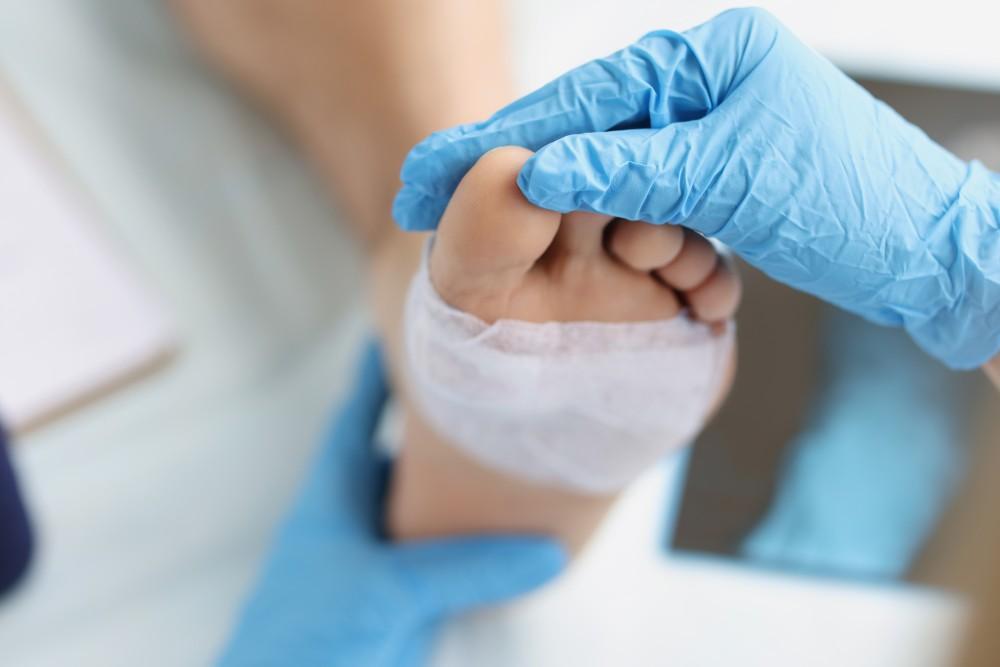
November is National Diabetes Month, making it the perfect time to focus on your health. At A Step Up Podiatry, LLC in Manalapan, New Jersey, Dr. Sanjay Gandhi helps patients protect their feet. We provide specialized diabetic foot care to prevent serious complications.
In a systematic review of 29 trials, Diabetes/Metabolism Research and Reviews found that structured education programs cut foot ulcer risks by about half. There is no rigid five-step clinical checklist. However, breaking your daily routine into five simple habits makes it easy to protect your feet.
1. Set up your space and tools
Find a comfortable, well-lit place to sit. Keep your tools nearby, including a clean towel and a mirror. Having everything ready helps you stay consistent with your daily checks.
Our team can help you design a safe home routine. We want to make this habit as easy as possible for you.
2. Inspect the tops and sides of your feet
Look closely at your skin and toenails. Check for cuts, blisters, redness, or swelling. Diabetic neuropathy can cause a loss of protective sensation. This means you might not feel a cut or blister.
If you spot an ingrown nail or callus, Dr. Gandhi can safely treat it at our office. Never try to cut these yourself at home.
3. Use a mirror to check the bottoms
The bottoms of your feet are highly vulnerable to pressure sores. The American Diabetes Association (ADA) recommends daily visual inspections using a mirror to check skin integrity, combined with physically feeling your feet. Using a shatterproof magnifying mirror helps you see the soles without straining your back.
We teach patients at A Step Up Podiatry, LLC how to perform these visual checks effectively. Catching a small red spot today can prevent a severe infection tomorrow.
4. Feel for temperature and texture changes
Gently run your hands over your feet. Note any areas that feel unusually warm, dry, or rough. The American Diabetes Association warns that a warm, swollen, and red foot can be a sign of Charcot neuroarthropathy. This is a serious condition where foot bones weaken and collapse.
If you notice these red flags, contact our office immediately for an urgent evaluation. We provide prompt diagnostics and treatment to protect your mobility.
5. Check inside your shoes
Always shake out your shoes before putting them on. Feel inside for pebbles, torn linings, or rough seams. Because neuropathy blocks pain signals, a small object can easily cause a severe sore.
We also offer custom orthotics to protect your feet from friction and pressure. These inserts are custom-made to fit your unique foot structure.
A home check is an early warning system, not a replacement for professional care. Never perform "bathroom surgery" on calluses or corns. If you find any issues, let our professional team handle them safely. Call 732-646-6194 or request an appointment online with Dr. Gandhi at A Step Up Podiatry, LLC today to keep your feet healthy.